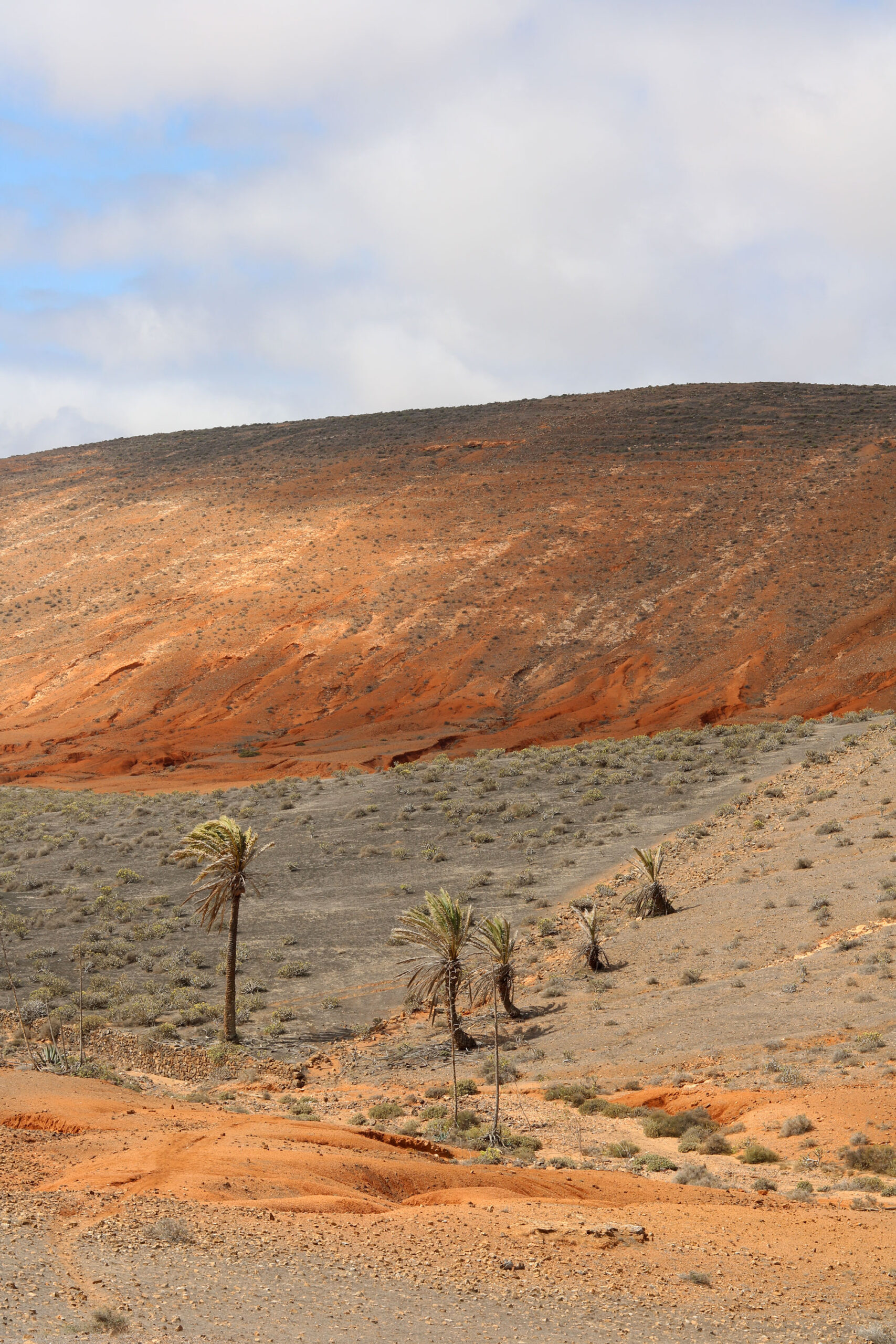
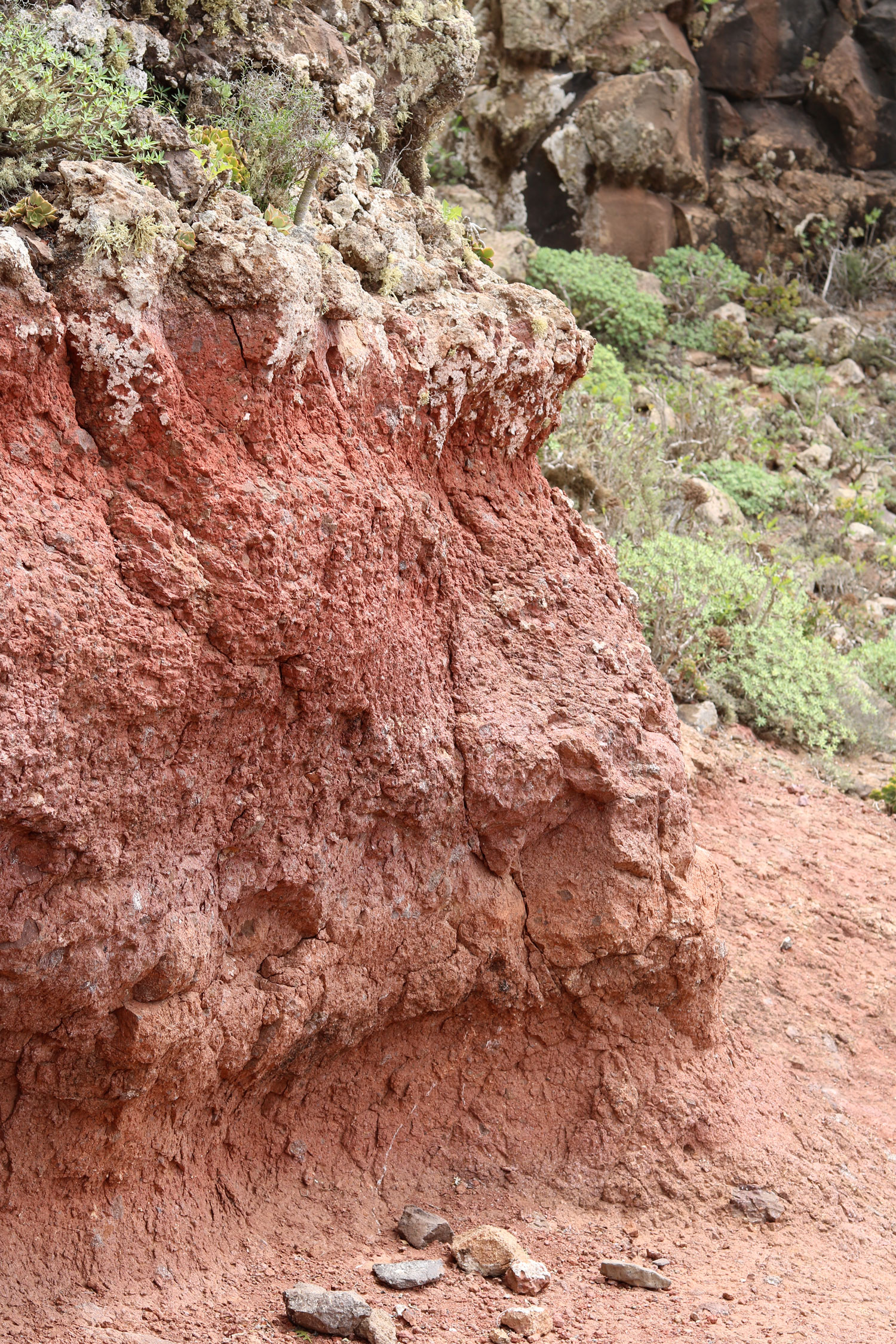
Calima or “haze” is traditionally an atmospheric phenomenon in which dust, smoke, and other dry particulates suspended in air obscure visibility and the clarity of the sky typical for the island of Lanzarote and other Canary islands. The particles that can be found in the air include volcanic ash, dust, sand and clay. The aspect of calima is characterized by orange and yellow foggy landscapes, frequently followed by low visibility and wet warm climate. This unique environmental condition has inspired the “Calima” collection, a series of ceramic vessels and sculptures that embody the spirit and texture of Lanzarote’s landscape. Crafted from the island’s native red clay, these pieces are a tangible reflection of the calima’s ethereal presence, translating the atmospheric haze into a tactile experience.
Due to the challenging workability of Lanzarote’s clay, the artisans employed techniques that celebrate its raw, natural state. The stretching technique elongates the clay, mimicking the long, sweeping winds that carry the haze across the island. Tearing, a method of binding and constricting the clay, evokes the tension and pressure within the landscape, capturing the energy of the earth beneath the surface. Kurinuki, a Japanese technique of carving out solid blocks of clay, adds a rugged, raw texture to the collection, reminiscent of the island’s volcanic terrain. A key element of the “Calima” collection is the contrast between smooth and rough surfaces. The smooth, flowing shapes of some vessels evoke the serene, calm moments when the haze settles softly over the landscape, blurring the horizon and softening the island’s rugged features. In contrast, the rough, jagged textures of other pieces refl ect the harsher, more abrasive aspects of the environment—the sharp edges of volcanic rock and the gritty sensation of wind-driven sand. This interplay between smoothness and roughness mirrors the dual nature of Lanzarote, where beauty and harshness coexist in a delicate balance.
The collection was developed with financing from the European Union through the Culture Moves Europe Programme during a residency at Hektor, Lanzarote.
Ceramic sculpture | 2024. | H 12cm, W 8cm, L 8cm | 0-3mm chamotte from several types of glazed and fired ceramic waste | Red earthenware clay from Lanzarote | Black volcanic sand
Ceramic sculpture | 2024. | H 16cm, W 10cm, L 10cm | 0-2mm chamotte from several types of glazed and fired ceramic waste | Red earthenware clay from Lanzarote | Black volcanic sand | Crushed rocks
Ceramic sculpture | 2024. | H 16cm, W 10cm, L 10cm | Red earthenware clay from Lanzarote | Red slip from Lanzarote
Ceramic bowl | 2024. | H 8cm, W 8cm, L 8cm | Red earthenware clay from Lanzarote
Ceramic sculpture | 2024. | H 12cm, W 16cm, L 16cm | 0-3mm chamotte from several types of glazed and fired ceramic waste | Red earthenware clay from Lanzarote | Black volcanic sand | Crushed rocks
Ceramic bowl | 2024. | H 6cm, W 8cm, L 8cm | Red earthenware clay from Lanzarote | Red slip from Lanzarote